Timber Frame Construction in Clarke County
Custom timber frame homes, barns, and estate structures in Virginia's Shenandoah Valley— where refined craftsmanship meets unspoiled landscapes. Learn what timber frame is or how it compares to stick frame.
For landowners planning thoughtful, long-term timber frame projects.
For landowners planning thoughtful, long-term timber frame projects.
Explore Timber Frame StructuresWhat types of timber frame structures do you build in Clarke County?
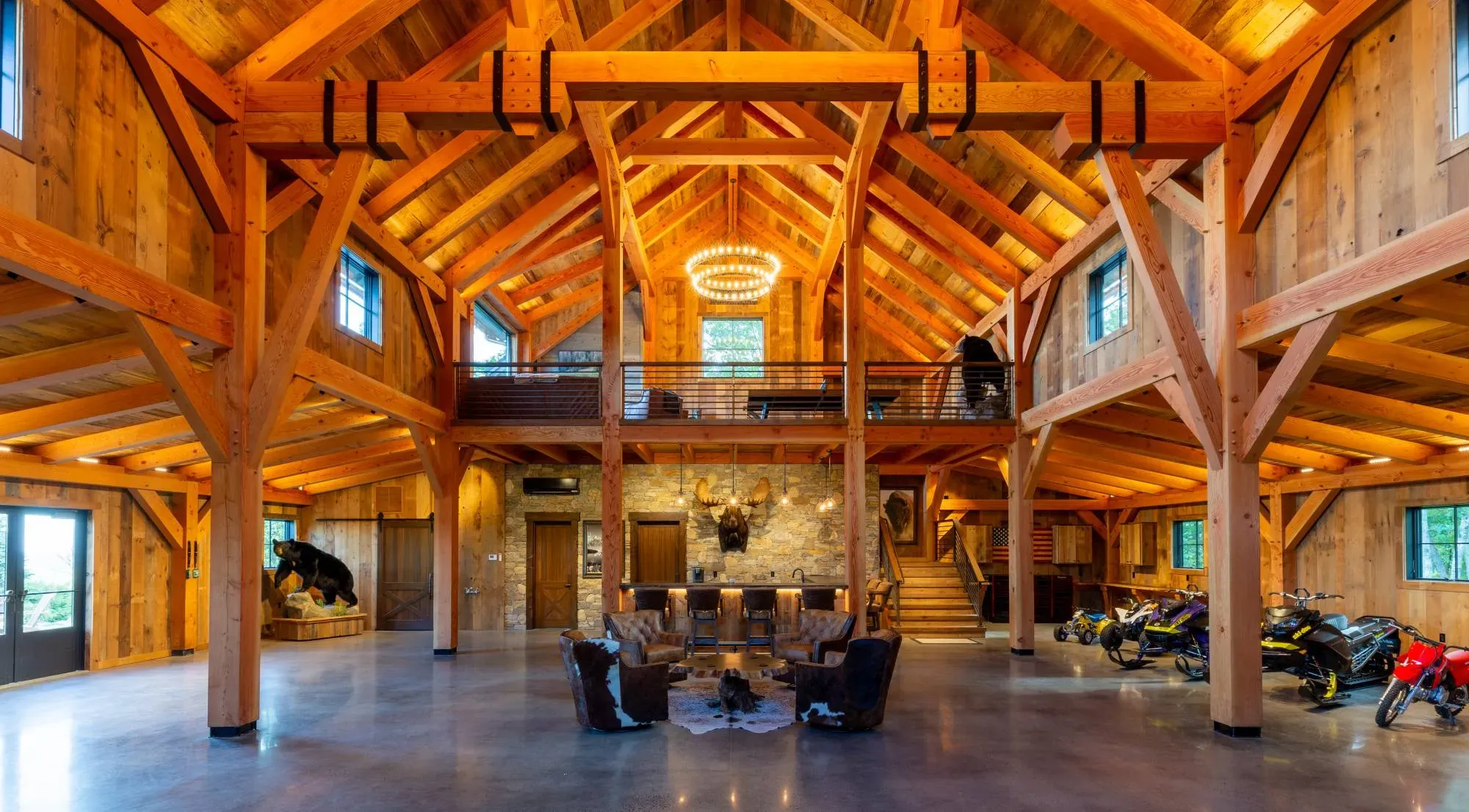
Clarke County's pastoral landscape and traditional character make it ideal for timber frame construction that respects the region's architectural heritage.
Timber Frame Homes
Primary residences and country homes featuring exposed joinery, balanced massing, and understated detailing suited to Clarke's rural character.
Timber Frame Barns & Agricultural Structures
Horse barns, equipment barns, carriage houses, and multi-use agricultural buildings designed for durability, flexibility, and architectural consistency.
Estate Compounds
Thoughtfully planned multi-structure properties that may include a main residence, guest house, barn, garage with living quarters, or pavilion—designed as a cohesive whole.
Legacy Outbuildings
Structures intended to serve families for generations, designed with future adaptability in mind rather than short-term trends.
How much does a timber frame home cost in Clarke County?
Clarke County offers competitive land and construction costs while maintaining proximity to Loudoun County and Northern Virginia. Lower land costs enable more investment in the structure itself. See detailed pricing for a carriage barn or our 5-step design-build process.
*Costs reflect 2024-2025 Clarke County market conditions. Site work, permits, and specialized finishes additional. Request a project assessment for accurate budgeting.
How long does a timber frame project take in Clarke County?
A complete timber frame home in Clarke County typically requires 16-25 months from initial consultation to occupancy. Clarke's efficient permitting often saves 1-2 months versus larger jurisdictions.
Total typical timeline: 16-25 months for a timber frame home; 10-14 months for a barn or pavilion.
Planning a timber frame home, barn, or estate structure in Clarke County? Start a project conversation.
What are the permitting requirements in Clarke County?
Clarke County has the most streamlined permitting in our service area. The small county staff provides personalized attention and fast turnaround for complete submissions.
Key Clarke County Permitting Realities
Clarke's efficient permitting is a significant advantage. Complete submissions with proper documentation typically receive approval within 1-2 months.
What zoning overlays affect timber frame construction in Clarke County?
Clarke County's zoning is simpler than neighboring counties, but overlays for historic areas and floodplains can significantly impact your project.
Clarke County's agricultural focus means most rural properties have straightforward zoning. Conservation easements are the primary constraint on legacy properties.
What are the common permitting bottlenecks in Clarke County?
Clarke County has the fastest permitting in our region, but certain situations can still create delays. Planning for these avoids timeline surprises.
Accessory dwelling requires special use permit—adds 2–3 months if required
Poor soils require engineered systems—adds 4–6 weeks and $15K–$40K
Smallest staff in region—incomplete submissions restart queue; accuracy critical
VOF-held easements require written approval; building envelope restrictions common
Historic overlay near Millwood/Berryville; period materials and colors required
Limestone aquifer yields hard water; whole-house treatment typically needed
Pro tip: Clarke's small staff rewards accuracy. Complete, well-organized submissions move through review quickly; incomplete ones go to the back of the queue.
What site constraints should I plan for in Clarke County?
Clarke County's Shenandoah Valley location creates specific site considerations related to geology, water, and rural infrastructure.
Early site evaluation—including soil testing, well capacity, and infrastructure assessment— ensures accurate budgeting and prevents construction delays.
What mistakes should I avoid with timber frame construction in Clarke County?
Clarke County's small-county efficiency can obscure planning considerations. Here are mistakes we help clients avoid:
Underestimating limestone foundation requirements
Clarke County's Shenandoah Valley location means limestone bedrock is common. Some sites require blasting or specialized foundations. A geotechnical survey before design prevents costly surprises.
Overlooking Shenandoah River floodplain restrictions
Properties near the Shenandoah River face floodplain regulations that significantly restrict building envelopes and require elevated construction. Verify flood zone status before committing to a property or design.
Assuming adequate rural power infrastructure
Remote Clarke County properties may have inadequate power capacity for modern homes. Transformer upgrades and line extensions can add $20,000-$75,000+ to project costs. Verify utility capacity early.
Skipping well water testing
Clarke County well water quality varies significantly. Some areas have high mineral content requiring treatment systems. Test water quality and quantity before finalizing your site plan—treatment systems affect budget and mechanical room planning.
Our initial consultation includes utility assessment, soil evaluation, and review of any recorded easements to ensure your project starts on solid ground.
Where We Build in Clarke County
Our work spans Clarke County's agricultural communities:
Clarke is Virginia's smallest county—we work throughout its boundaries on properties suited to timber frame construction.
See Our Clarke County Work
Browse completed timber frame projects from Clarke County's pastoral estates and agricultural properties.
Frequently Asked Questions
Start Your Clarke County Project
Ready to discuss a timber frame home, barn, or estate structure in Clarke County? We begin with a complimentary consultation to understand your land and vision.
Request a ConsultationAdditional Services
Other Services We Offer
Complete construction solutions for Clarke County properties
Regional Expertise
Counties We Serve
Hearthstone Design Build specializes in timber frame and estate construction throughout Virginia's premier rural building markets.